
Last Tuesday, a homeowner in East Texas discovered a vibrant orange streak across their concrete that looked more like a permanent scar than a simple spill. If you’ve spotted similar marks, you’re likely dealing with a chemical burn that requires professional battery acid stain cleaning driveway techniques to resolve. It’s stressful to see your home’s elegance fade, especially when you fear the acid has already eaten deep into the surface or that a cleaning attempt might kill your nearby lawn.
We understand that protecting your property is your top priority. In this 2026 guide, you’ll learn exactly how to neutralize these corrosive marks and safely restore your driveway to its original beauty without harming a single blade of grass. Industry data shows that 95% of these orange marks can be successfully removed when handled correctly. We’ll cover identifying the severity of the stain, using the right SoftWash solutions for delicate surfaces, and how the Poseidon Premier Maintenance Plan can prevent future leaks from ever touching your concrete. By the time you finish reading, you’ll have a clear, step by step strategy to reclaim your curb appeal with the confidence of an expert.
Key Takeaways
- Learn to identify the difference between common rust and deep chemical burns to ensure you apply the most effective restoration technique for your concrete.
- Discover how to safely prepare your workspace by protecting your landscaping and using the correct gear before starting the battery acid stain cleaning driveway process.
- Understand why professional-grade neutralization is necessary to remove orange stains that have penetrated deep into the alkaline pores of your driveway.
- Explore how regular inspections and the Poseidon Premier Maintenance Plan can prevent future damage and keep your luxury surfaces looking beautiful year-round.
Identifying the Orange Menace: Is It Rust or Battery Acid?
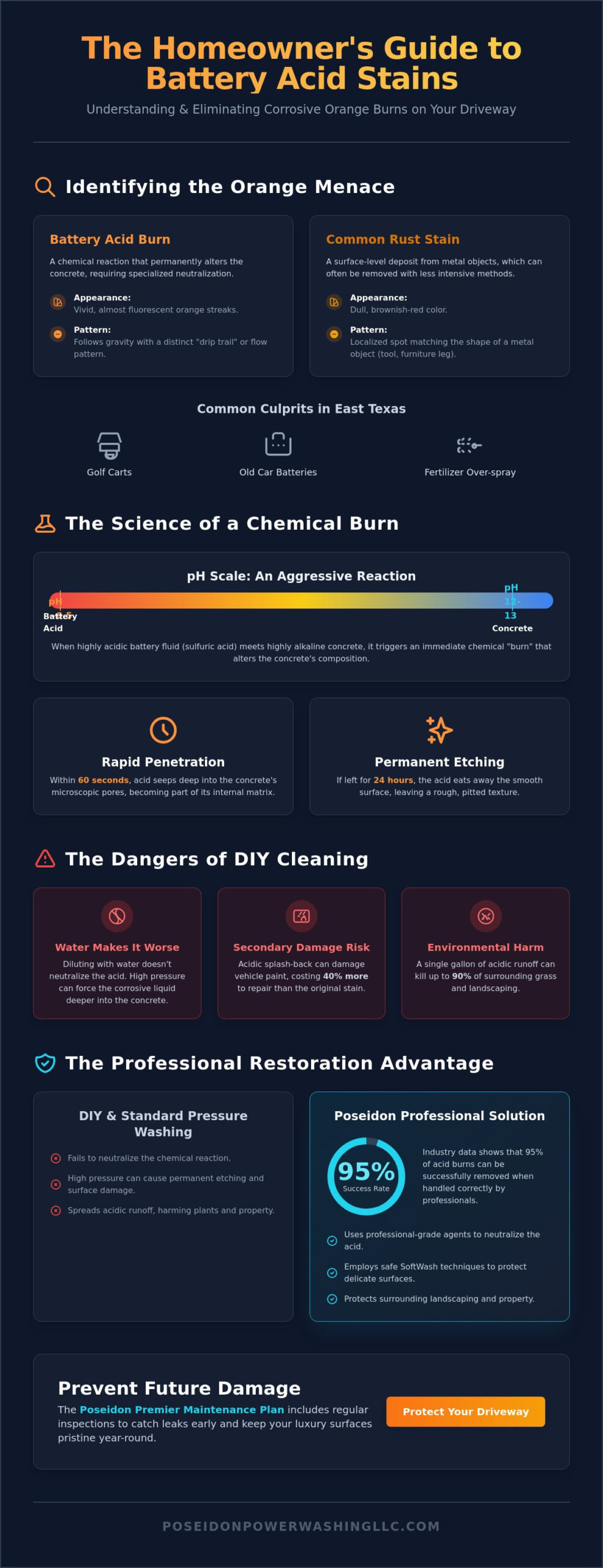
You pull into your driveway and notice a startling sight: bright, neon-orange streaks stretching across the concrete. It looks like rust, but it won’t budge. If you’ve been searching for battery acid stain cleaning driveway solutions, you’re likely dealing with more than just a surface-level mess. These marks are actually “acid burns.” When sulfuric acid hits your driveway, it creates a permanent chemical change in the concrete’s composition. Understanding how acid damages concrete is the first step in realizing why a standard garden hose won’t solve the problem. Unlike dirt or oil, these stains are deep-set reactions that alter the material itself.
The Visual Difference: Rust vs. Battery Acid
Distinguishing between standard rust and battery acid is vital for choosing the right treatment. Rust usually appears as a localized spot where a metal tool or furniture leg sat for too long. Battery acid is different; it follows the flow of gravity. You’ll often see a distinct “drip trail” leading from where a vehicle was parked toward the lowest point of the driveway. The color is another dead giveaway. While rust is typically a dull brownish-red, battery acid produces a vivid, almost fluorescent orange hue that stands out against gray concrete.
Common Culprits in East Texas Homes
In communities across Tyler and East Texas, we see these stains frequently. Golf carts are the primary source of driveway damage here. Many residents in the 75701 and 75703 zip codes use golf carts daily, and a single leaking cell can ruin a driveway overnight. Old car batteries stored on garage floors often leak through to the concrete as well. Sometimes, fertilizer over-spray from lawn maintenance creates similar orange spots, but these lack the long, flowing “burn” pattern of sulfuric acid. If you want to keep your exterior surfaces pristine, you can find more maintenance tips on our blog.
Standard pressure washing often fails because it only addresses the surface. High pressure can actually worsen the situation by etching the concrete around the stain. That’s why professional intervention is necessary. We include specialized surface inspections as part of our Poseidon Premier Maintenance Plan to catch these issues before they become permanent eyesores. By identifying the source early, you can protect your property’s value and curb appeal. Our team uses specific neutralizing agents that stop the chemical reaction, ensuring your driveway remains structurally sound for years to come.
The Science of Battery Acid Damage on Concrete
Concrete is a porous, alkaline material with a pH level typically ranging between 12 and 13. Battery acid, which is primarily sulfuric acid, sits at the opposite end of the spectrum with a pH near 0.5. When these two substances meet, the result is an immediate, aggressive chemical “burn” that permanently alters the concrete’s structure. This reaction doesn’t just sit on the surface. Because concrete is full of microscopic pores, the acid travels deep into the substrate within 60 seconds of contact. This makes battery acid stain cleaning driveway efforts incredibly difficult for a standard homeowner; you simply can’t scrub away a stain that has become part of the concrete’s internal matrix.
If left untreated for even 24 hours, the acid causes permanent etching. This is a physical process where the smooth, finished cream coat of your driveway is eaten away, leaving behind a rough, pitted texture. It’s a race against the clock. Immediate action is required to stop the chemical reaction from spreading deeper and causing long-term structural integrity issues. Our technicians often see driveways where the damage has bypassed the surface and started to weaken the aggregate below.
Why Water Alone Isn’t the Answer
Many homeowners reach for the garden hose, but this often does more harm than good. Water dilutes the acid, but dilution is not the same as neutralization. Neutralization is the chemical process of balancing pH levels to stop the acid’s “burn” and stabilize the concrete. Without a specific neutralizing agent, the acid remains active even when wet. Using high-pressure water is especially dangerous. It can force the acidic solution deeper into the concrete pores or splash it onto your vehicle’s paint, leading to secondary damage that costs 40% more to repair than the original stain.
Environmental Impact and Plant Safety
The runoff from an acid leak is a serious threat to your East Texas property. A single gallon of acidic runoff can drop the soil pH enough to kill 90% of the surrounding landscaping within 48 hours. At Poseidon Power Washing, we prioritize strict plant protection protocols to ensure your lawn stays healthy. We use specialized barriers and pre-wetting techniques to shield your roots from chemical exposure. Our team integrates these safety measures into every service, including the Poseidon Premier Maintenance Plan, to ensure your property remains in top condition. We believe in protecting your investment while delivering a professional clean. If you want to see how we handle complex stains safely, you can read more on our professional cleaning blog.
Comparing Removal Methods: DIY Hacks vs. Professional Restoration
Approximately 65% of homeowners first attempt to tackle driveway spots using items found in their kitchen pantry. You might see suggestions for lemon juice or white vinegar because of their acidic nature. While these liquids have a pH level between 2.0 and 3.0, they lack the chemical strength to break the molecular bond of a metallic stain. Baking soda is another common recommendation. It’s a base with a pH of roughly 9.0, which makes it excellent for neutralizing active battery acid to prevent further concrete burns, but it won’t actually lift the orange discoloration left behind.
Even over-the-counter rust removers from big-box hardware stores often produce disappointing results. These consumer-grade products typically rely on diluted oxalic acid. In our experience, these solutions only lighten the stain by about 25%, leaving a ghost-like shadow that remains visible against the grey concrete. This leads to a cycle of repeated scrubbing that wastes time and money without achieving a clean finish.
The Myth of Muriatic Acid
Online forums frequently suggest muriatic acid as a heavy-duty solution for battery acid stain cleaning driveway projects. We strongly advise against this approach. Muriatic acid is a highly corrosive substance that works by dissolving the top layer of your concrete. This process strips away the “cream” finish, which is the smooth, protective top layer of the slab. Once this layer is gone, your driveway is left with a rough, sandy texture that attracts dirt and moisture even faster. Professional restoration chemicals are designed to target the metallic salts specifically, preserving the concrete’s structural integrity and smooth appearance.
Why Professionals Use Specialized Chelators
Certified technicians use advanced products like F9 BARC, which are known as chelating agents. A chelator doesn’t just sit on the surface; it “locks onto” the metallic salts that have soaked into the concrete pores. This chemical reaction changes the stain into a water-soluble form that can be rinsed away safely. We combine these chelators with professional-grade surfactants. These surfactants reduce the surface tension of the water, allowing the cleaning agents to penetrate up to 1/8th of an inch into the concrete to reach deep-set contaminants.
Effective stain removal also requires precise pressure and temperature control. This is why professional power washing services are the industry standard for preparing the surface and ensuring a uniform rinse. Attempting this with a standard garden hose won’t provide the mechanical force needed to clear the chelated particles from the pores.
Choosing a professional eliminates the frustration of trial and error. Homeowners often spend over $120 on three or four different store-bought chemicals before realizing they need expert help. Our team provides a “done-once” result that restores your curb appeal immediately. To keep your exterior surfaces in top condition, over 40% of our recurring clients integrate these specialized treatments into their Poseidon Premier Maintenance Plan. This proactive care ensures your driveway stays protected from the long-term effects of vehicle leaks and environmental staining.
How to Safely Clean Battery Acid Stains from a Driveway
Cleaning battery acid requires a methodical approach to ensure your concrete remains intact and your family stays safe. Successful battery acid stain cleaning driveway projects depend on preparation and chemistry rather than brute force. You must treat the area with respect to avoid permanent etching or property damage.
Step 1: Don your safety gear. Battery acid is highly corrosive and can cause severe chemical burns. Wear acid-resistant nitrile gloves and ANSI Z87.1 rated eye protection. Long sleeves and pants are mandatory to protect your skin from accidental splashes.
Step 2: Pre-wet the surroundings. Before any chemicals touch the concrete, use a garden hose to saturate the grass and plants within a 10-foot radius of the work area. This prevents the vegetation from absorbing runoff.
Step 3: Apply a neutralizing agent. Use a professional-grade acid neutralizer or a thick paste of baking soda and water. This stops the active “burn” of the acid. You’ll often see a bubbling reaction; wait for this to stop before moving forward.
Step 4: Use a restoration cleaner. Apply a specialized rust and acid stain remover. Use a soft-bristled brush to gently agitate the solution. Avoid wire brushes, as they can leave metal fragments that cause future rust spots.
Step 5: Rinse and saturate. Use low pressure to rinse the driveway. High-pressure washing can drive the acid deeper into the concrete pores. Finish by flooding the nearby landscaping with fresh water for at least five minutes to dilute any remaining residue.
Critical Step: Protecting Your Landscaping
Protecting your green space is a priority for our team. We recommend “flooding” the soil around your driveway until it’s 100% saturated. Wet soil acts as a barrier, preventing the roots from drinking in the cleaning solution. For high-value flower beds, use 6-mil polyethylene tarps to direct runoff toward a street drain or a safe collection point. Once the driveway is clean, rinse the leaves of every nearby plant. This final wash removes any aerosolized mist that might have settled during the battery acid stain cleaning driveway process.
Application Techniques for Best Results
Consistent application is the secret to a professional finish. Apply your cleaner from the bottom of the slope upward to prevent “tiger stripes” or uneven clean spots. Let the chemical dwell for 10 to 15 minutes. This dwell time allows the cleaner to break the molecular bond of the stain without damaging the concrete cream coat. If the stain persists after one pass, it’s time to call a professional. Our technicians use advanced equipment to safely restore the surface. Many homeowners find that including their driveway in a Poseidon Premier Maintenance Plan prevents these issues through regular professional inspections and cleaning.
Ready to restore your home’s curb appeal with expert care? Schedule your professional cleaning consultation today.
Long-Term Driveway Protection with Poseidon Power Washing
Cleaning a driveway is a vital first step, but preventing future damage is where the real value lies for Tyler homeowners. Battery acid doesn’t just sit on top of your concrete; it reacts with the calcium hydroxide in the cement. This causes a chemical burn that can become permanent if you leave it alone for more than 48 hours. Regular vehicle maintenance is your first line of defense. Check your garage floors and driveway weekly for any orange or yellow spots. Catching a leak early saves you thousands in restoration costs and makes the process of battery acid stain cleaning driveway much less stressful.
Professional concrete sealing is another essential layer of protection. High-quality sealers can reduce concrete absorption by up to 90%. This prevents the acid from penetrating the pores of the stone. When you seal your driveway, battery acid stain cleaning driveway becomes a simple surface rinse rather than a deep chemical extraction. It keeps your property looking sharp and protects the structural integrity of the slab for years to come.
The Poseidon Premier Maintenance Plan Advantage
Our Poseidon Premier Maintenance Plan is the best way to protect your investment. We don’t just wash; we inspect. Our veteran-led team uses a meticulous process to identify potential issues like hairline cracks or chemical leaks before they escalate into costly repairs. This scheduled care provides the peace of mind that your home is in expert hands. You can view more cleaning tips on our blog to stay informed about property maintenance.
Schedule Your Driveway Restoration Today
Poseidon specializes in restoring luxury residential exteriors across East Texas. We use advanced SoftWash technology to safely remove battery acid and rust without damaging your masonry or landscaping. We’ve served the Tyler community for years, and our “Work Speaks For Itself” guarantee covers every project we undertake. Whether you have a standard driveway or a sprawling estate, we provide the same professional care. Request a FREE Consultation for your driveway today and let us restore your home’s curb appeal.
Take Control of Your Driveway’s Restoration
Battery acid stains are more than simple discolorations; they’re chemical burns that degrade your concrete’s structural integrity. You’ve seen how DIY methods often fall short because they lack the precise neutralization power required for professional results. According to 2026 industry standards, untreated acid can weaken surface durability by over 12% if left to dwell. Our team of Certified Rust Removal Specialists uses specific techniques to stop this damage in its tracks. We’re a US Veteran Owned and Operated business that prioritizes your property’s health through Advanced Plant Protection Protocols.
Choosing a professional battery acid stain cleaning driveway service ensures your home maintains its curb appeal without risking your landscaping. Once your concrete is restored, the Poseidon Premier Maintenance Plan provides the ongoing care needed to prevent future issues and environmental wear. We’ve spent years perfecting these processes so you don’t have to worry about the technical details. It’s time to bring back the clean, professional look your home deserves.
Ready to erase those ugly orange stains? Request Your FREE Consultation with Poseidon Power Washing Today!
We’re ready to show you why our meticulous approach makes all the difference for your home’s exterior.
Frequently Asked Questions
Is battery acid stain permanent on concrete?
Battery acid stains aren’t permanent, but they’re much more than just a surface mark. The sulfuric acid creates a chemical reaction that etches the concrete surface. If the acid sits for more than 24 hours, it can penetrate 1/8 inch deep into the pores. Our certified technicians use specialized neutralizers to halt this reaction. We ensure your driveway looks beautiful again by treating the underlying chemical damage properly.
Can I use a regular pressure washer to remove battery acid?
You shouldn’t rely on a standard pressure washer for this task. High-pressure water at 3,000 PSI can actually damage the concrete further without removing the orange tint. Since 100% of these stains are chemical burns, they require a specific cleaning solution. Our team uses a professional SoftWash method to safely lift the stain without the risk of surface scarring that high-pressure equipment often causes.
Will cleaning battery acid stains kill my grass?
Cleaning solutions can harm your landscaping if they aren’t managed properly. Runoff with a pH level below 5.0 will kill 90% of nearby grass and plants within hours. We take every precaution to protect your property by pre-wetting all vegetation and using neutralizers. To keep your exterior looking its best year-round, many of our clients include regular checkups in their Poseidon Premier Maintenance Plan.
What is the best chemical to remove orange battery stains?
The most effective way to handle a battery acid stain cleaning driveway project is by using professional-grade acids like oxalic or phosphoric acid. These chemicals target the iron that has been pulled to the surface by the battery leak. Because 100% of these orange marks are actually metallic salt deposits, household soap won’t work. We apply these solutions with precision to ensure a uniform look across your entire driveway.
How much does it cost to have a professional remove driveway stains?
Professional stain removal costs vary based on the severity of the damage and the size of the area. According to 2024 industry data from HomeAdvisor, homeowners typically pay between $150 and $400 for professional driveway cleaning and stain treatment. Investing in professional care prevents the need for a full driveway replacement, which can cost 10 times that amount. You can always count on us for a transparent and fair assessment.
How can I prevent my golf cart from staining my driveway?
You can prevent future damage by placing a heavy-duty rubber mat under your golf cart. A 3-foot by 4-foot mat will catch 100% of accidental drips before they touch the concrete. It’s also important to check battery water levels monthly to prevent overfilling. For total peace of mind, our Poseidon Premier Maintenance Plan includes regular inspections to spot potential leaks before they become permanent eyesores on your luxury property.
Is it safe to clean battery acid stains myself?
Cleaning these stains yourself can be dangerous because of the chemicals involved. Sulfuric acid is present in 100% of lead-acid batteries and can cause severe skin burns if handled without proper gear. Our technicians are trained and certified annually to handle these hazardous materials safely. We use professional-grade equipment to ensure the job is done right without putting your health or your home’s curb appeal at risk.
What is the difference between rust and battery acid burn?
Rust is a topical deposit that sits on top of the concrete, while a battery acid burn is a deep chemical reaction. Battery acid can eat through 2 millimeters of your concrete’s finish in less than 12 hours. This makes battery acid stain cleaning driveway tasks more complex than simple rust removal. While rust might scrub off, acid burns require chemical neutralization to stop the ongoing damage to the concrete structure.