
What if the high-pressure spray you hired to refresh your home is actually the very thing that strips your paint or cracks your siding? It’s a common fear for many property owners who find themselves staring at a menu of services without knowing what is the difference between power washing and pressure washing. You want a pristine exterior, but you don’t want to risk permanent damage to your shingles or delicate masonry just to remove a little grime.
We understand that your home is your most significant investment; protecting it requires more than just raw force. In this article, you’ll discover the critical differences between power, pressure, and soft washing so you can choose the safest, most effective method for your property. We’ll explain how the element of heat changes the cleaning process and why certain surfaces require a much gentler touch to remain intact. You’ll also see how our specialized approach, including the Poseidon Premier Maintenance Plan, prioritizes both surface integrity and the health of your surrounding landscape. By the end, you’ll have the confidence to hire a professional who treats your property with the expert care it deserves.
Key Takeaways
- Learn why heat is the secret ingredient that separates power washing from standard pressure washing when tackling stubborn oil and grease.
- Discover what is the difference between power washing and pressure washing by identifying when to use high-temperature thermal energy versus mechanical force.
- Understand why soft washing has become the industry standard for safely cleaning residential siding and roofs without the risk of damage.
- Learn to match the right cleaning method to your specific surface to ensure a high-quality result for your East Texas home.
- Explore how the Poseidon Premier Maintenance Plan provides a structured approach to property care while ensuring your plants and landscaping remain protected.
The Core Distinction: Heat vs. Mechanical Pressure
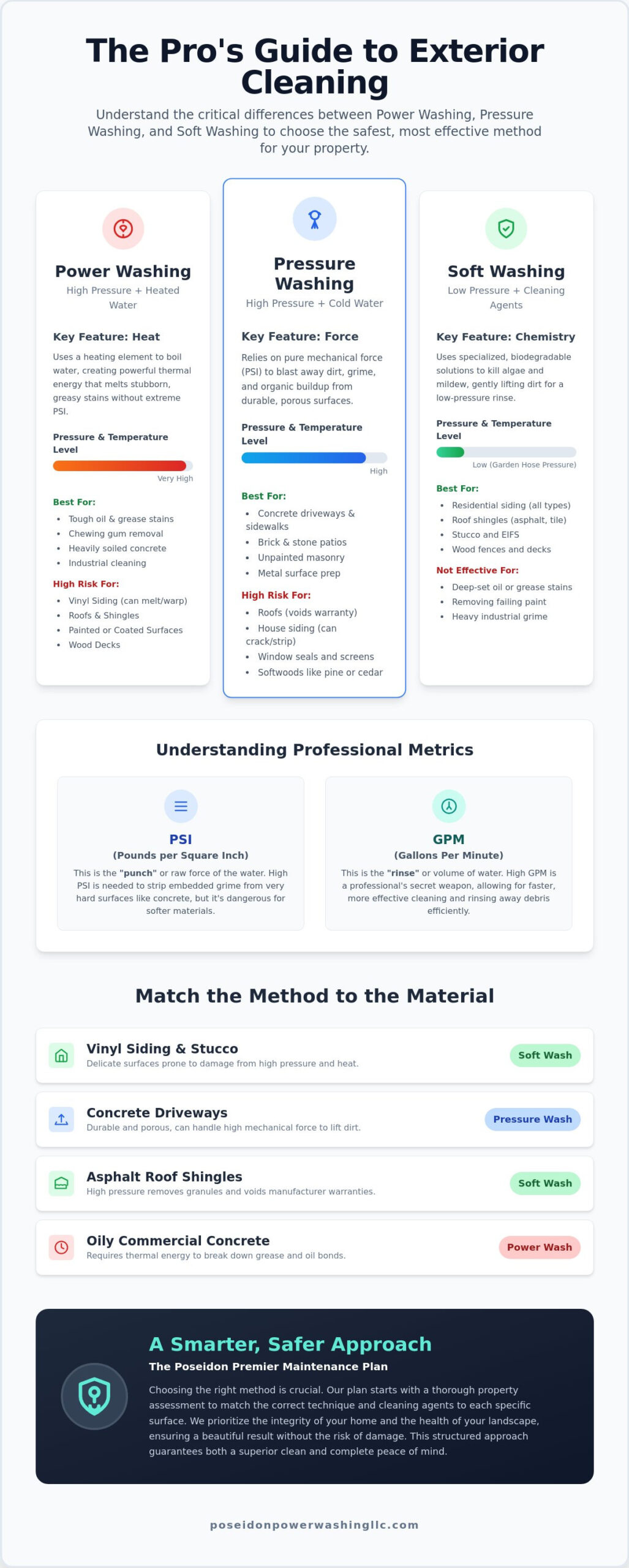
Understanding what is the difference between power washing and pressure washing is the first step in ensuring your property receives the correct care. While people often use the terms interchangeably, they represent two distinct levels of cleaning technology. Pressure washing relies on mechanical force, measured in Pounds per Square Inch (PSI), to blast away surface debris. Power washing is a specialized heavy-duty subset that combines that same high pressure with high-temperature thermal energy. This distinction is vital because using the wrong method can lead to wasted money or unnecessary property damage.
The internal heating coil is the true game-changer. While the machines might look identical to the untrained eye, a power washer contains a burner system that heats the water before it reaches the nozzle. You can think of it like the difference between a standard garden hose and an industrial steam cleaner. While many sources describe pressure washing or power washing as the same thing, the professional industry treats them as different tools for different jobs. A power washer is not a synonym for a pressure washer; it’s a specific upgrade designed for the toughest industrial stains.
How the Heating Element Changes the Cleaning Process
Hot water works at a molecular level to break down stubborn contaminants like grease, oil, and chewing gum. It’s similar to washing greasy dishes in a sink; cold water just pushes the fat around, but hot water melts it away. This thermal energy allows us to achieve a deeper clean without having to rely solely on extreme pressure. To do this safely, we use specialized pumps and high-grade hoses designed to withstand boiling temperatures without failing under the heat. This process is essential for commercial environments where cold water simply can’t break the chemical bonds of industrial grime.
Why Terminology Matters for Your Property Estimate
Using the wrong term when requesting a quote can lead to confusion and incorrect pricing. If a contractor assumes you need heat for a simple siding wash, you might pay for equipment that isn’t necessary. More importantly, heat can be destructive on certain materials. High temperatures can warp or melt vinyl siding or damage specialized coatings on modern building materials. Our team uses the Poseidon Premier Maintenance Plan to assess every surface before we begin, ensuring we use the right method for your specific needs. The primary difference between these two services is the presence of a high-capacity heating unit.
What is Pressure Washing? Mechanics and Best Applications
Pressure washing is the most common method for cleaning hard exterior surfaces. It uses unheated, cold water pushed through a high-pressure pump to strip away dirt. To truly understand what is the difference between power washing and pressure washing, you have to look at the mechanics behind the spray. Professional-grade equipment relies on two main metrics: PSI (Pounds per Square Inch) and GPM (Gallons per Minute). While many homeowners focus on the high PSI numbers found on retail machines, experienced technicians know that GPM is often more important for cleaning speed and quality.
PSI represents the “punch” or the raw force of the water hitting the surface. GPM represents the volume of water moving through the machine. High volume allows us to rinse away debris efficiently, effectively “scrubbing” the surface with millions of water molecules per second. This mechanical action is the gold standard for masonry and stone projects that require a deep, restorative clean. It’s the difference between a tiny pinprick of pressure and a powerful, cleansing wave that carries away years of buildup. Understanding what is the difference between power washing and pressure washing helps you realize that while cold pressure is a workhorse, it isn’t a universal solution for every stain.
Surfaces That Thrive Under High Pressure
High-pressure force is ideal for porous, durable materials that can withstand mechanical stress. Concrete driveways and sidewalks are the primary candidates for this method because they can handle the intensity required to lift embedded dirt. Similarly, brick patios and unpainted stone walls that can withstand 3,000+ PSI benefit from the aggressive reach of a pressure washer. It’s also an excellent tool for preparing metal surfaces for repainting by stripping away old, flaky layers of oxidation and debris that would otherwise prevent a smooth finish.
The Limitations of Cold Water Pressure
Despite its strength, cold water has clear limits. It often struggles with deep-set oil stains or automotive fluids that have soaked into concrete. Without the thermal energy found in power washing, cold water simply can’t emulsify those liquids. There’s also a significant risk of “etching” or leaving permanent swirl marks in concrete if the nozzle is held too close or the pressure is set too high for the age of the material. This is why we recommend professional-grade machines over “big box store” electric units. Pro equipment provides the stability and volume needed to clean without leaving unsightly scars on your masonry.
Our team manages these risks through the Poseidon Premier Maintenance Plan, which ensures each surface is treated with the precise pressure and volume needed for a safe, high-quality result. If you aren’t sure which method your property needs, you can explore our professional cleaning options to find the perfect fit for your home’s exterior.
When to Choose Power Washing for Tougher Industrial Grime
Power washing acts as the “heavy artillery” in the cleaning world. While we’ve discussed how cold water works for standard masonry, certain commercial and industrial challenges require the aggressive intervention of thermal energy. When business owners ask what is the difference between power washing and pressure washing, the answer usually comes down to the severity of the mess and the type of contaminants involved. High-temperature water kills organic growth, such as mold and spores, far more effectively than cold water alone. This thermal shock doesn’t just clear the surface; it neutralizes the biological roots of the problem to prevent rapid regrowth.
Beyond aesthetics, heat plays a critical role in sanitizing high-traffic public areas. Sidewalks outside hospitals, retail centers, and parks accumulate more than just dirt; they harbor bacteria and pathogens. Power washing provides a level of hygiene that cold pressure simply cannot match. It’s also the only reliable way to remove complex adhesives and stubborn residues like chewing gum. Gum becomes pliable and easy to lift once it reaches a specific temperature, allowing us to clear it without scarring the underlying concrete. This meticulous approach ensures a premium result for high-end commercial properties.
Blasting Away Grease, Oil, and Red Clay
Properties in Tyler, TX, face unique environmental challenges, specifically red clay. This iron-rich soil stains concrete deeply, often requiring thermal energy to lift the pigment from the pores of the stone. Cold water often leaves a faint orange shadow, but 200-degree water emulsifies the particles for a complete restoration. We use this same high-heat process to tackle oil and grease on commercial parking lots. By heating the water, we break the molecular bond between the oil and the concrete. An added benefit of using heat is that it significantly reduces the need for harsh chemicals, making the process safer for your property and the surrounding environment.
Commercial Applications: Parking Garages and Dumpster Pads
Restaurants and retail centers have specific needs that go beyond simple curb appeal. Dumpster pads and loading docks are breeding grounds for grease and bacteria. The sanitizing power of heat is mandatory here to prevent odors and maintain health standards. For managers overseeing large-scale multi-building facilities, the efficiency of power washing is unmatched. It allows us to clear massive square footage faster than traditional methods while ensuring a deeper, more professional clean.
If you’re managing a business, understanding professional power washing services is essential for long-term asset protection. We include these high-heat treatments as part of our Poseidon Premier Maintenance Plan for our commercial partners. This ensures that your facility remains safe, clean, and welcoming for your customers year-round. Our technicians are also trained to handle Texas wastewater regulations, ensuring your property remains compliant with TCEQ standards during every service.
The Safety Gap: Why Soft Washing is the Residential Standard
Many homeowners start their research by asking what is the difference between power washing and pressure washing, only to realize that for their specific needs, both options might be too aggressive. While high pressure is excellent for concrete, it can be a liability for your home’s siding and roof. Soft washing has emerged as the true residential standard because it prioritizes safety without sacrificing results. This method operates at a low pressure, typically under 1,000 PSI, which is about the same force as a heavy rainstorm. It’s a precision tool designed for delicate surfaces that can’t handle the mechanical stress of traditional methods.
Instead of relying on raw force to “blast” dirt away, soft washing uses a chemical-first approach. We apply a specialized blend of eco-friendly surfactants and algaecides that break down contaminants at the source. This often leads to the question: “Will low pressure really get it clean?” The answer is a resounding yes. In fact, it cleans more thoroughly than high pressure because the solutions penetrate the pores of the material to kill the biological roots of stains. You aren’t just “shaving” the algae off the surface; you’re neutralizing it so it doesn’t return a few months later.
Protecting Siding, Roofs, and Windows
Using high pressure on a residential structure is a recipe for disaster. Excessive force can easily blow the seals on double-pane windows or force water behind vinyl siding, leading to hidden mold growth inside your walls. Perhaps most importantly, many manufacturers will void roof warranties if they find evidence of high-pressure cleaning. Soft washing is the only method approved by the Asphalt Roofing Manufacturers Association (ARMA) for cleaning shingles. It safely eliminates Gloeocapsa Magma, the black algae responsible for those unsightly streaks, by neutralizing it completely. For property owners who want to dive deeper into these specialized techniques, we recommend reading our ultimate guide to soft washing.
The Environmental and Landscaping Safety Protocol
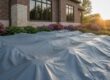
A common concern with any chemical treatment is the health of the surrounding garden. At Poseidon Power Washing LLC, we treat your ecosystem with the same respect as your architecture. Our technicians follow a strict protocol that includes pre-wetting all nearby foliage to ensure the leaves are saturated with fresh water. We also use tarps to cover sensitive bushes and perform a thorough post-rinse to wash away any residual solution. This “safe” approach means your home looks like new while your landscape stays vibrant and healthy.
This level of meticulous care is a core component of the Poseidon Premier Maintenance Plan, ensuring that every residential job meets our high standards for property protection. We believe that a professional clean shouldn’t come at the cost of your landscaping. If you’re ready to refresh your home’s exterior without the risk of damage, schedule your professional soft washing service today.
Choosing the Right Method for Your East Texas Property
Selecting the correct cleaning technique for your property is about more than just aesthetics; it’s about preserving the lifespan of your surfaces. When you consider what is the difference between power washing and pressure washing, it helps to have a quick reference guide for your East Texas home or business. We recommend standard pressure washing for durable concrete driveways and walkways. Power washing is the necessary choice for commercial oil stains or heavy industrial grease. For your home’s siding and roof, soft washing remains the safest and most effective standard.
Our local climate in Tyler and Longview presents unique challenges that property owners in other regions might not face. The high humidity in East Texas creates an ideal environment for rapid algae growth and organic buildup. These contaminants don’t just look bad; they can cause premature rot and permanent staining if left untreated. Choosing a professional service ensures that the right technology is applied to each specific problem. This expertise is what differentiates a certified cleaning expert from a “guy with a pressure washer” who might use the same high-pressure nozzle on every surface he encounters.
Assessing Your Specific Cleaning Needs
Before you hire a contractor, you should ask specific questions to ensure they understand the nuances of property care. Ask if they use a heating element for oil remediation or if they have dedicated low-pressure equipment for roofs. A “one size fits all” approach is the most common cause of property damage in our industry. In many cases, the best choice for a property is a hybrid approach that utilizes different methods for different zones. For example, we might use heat on your dumpster pad while switching to a gentle soft wash for your storefront’s awning.
Long-Term Value with the Poseidon Premier Maintenance Plan
Scheduled cleanings are the most effective way to prevent the accumulation of rust, mold, and environmental grime. The Poseidon Premier Maintenance Plan provides a structured solution for year-round curb appeal, allowing us to catch minor issues like rust streaks before they become permanent eyesores. This proactive care saves you money over time by extending the life of your paint and roofing materials. Our plan also includes our signature plant protection protocol, ensuring that your landscaping remains as beautiful as your freshly cleaned building. We take pride in being a dependable partner for East Texas property owners who value meticulous, expert service.
Maintaining a clean exterior doesn’t have to be a source of anxiety. If you are ready to experience a higher standard of property care, contact Poseidon Power Washing LLC for a professional consultation today.
Secure Your Property’s Future with Expert Cleaning
Choosing the right professional ensures your property remains a beautiful, safe investment for years to come. Now that you understand what is the difference between power washing and pressure washing, you can make an informed decision about your home’s care. It’s clear that while heat is vital for industrial grease, a gentle soft wash is the safest choice for your residential roof and siding. Our team at Poseidon Power Washing LLC combines annual professional certifications with cutting edge drone softwashing technology to treat high reach areas with precision and safety.
By enrolling in the Poseidon Premier Maintenance Plan, you ensure your Tyler or Longview property receives meticulous care throughout the year. This structured approach catches staining early and always prioritizes the health of your surrounding plants. We take great pride in our high local ratings and our commitment to industry leading standards. Take the first step toward a pristine exterior and a worry free experience today.
GET YOUR FREE EXTERIOR CLEANING ESTIMATE
We look forward to helping you restore and protect your property with the expert care it deserves.
Frequently Asked Questions
Is power washing or pressure washing better for a driveway?
Pressure washing is the standard choice for most concrete driveways because it effectively removes surface dirt and grime. However, if your driveway has stubborn oil leaks or grease buildup, power washing is the superior option. The added heat helps break down automotive fluids that cold water cannot reach. Our technicians assess the condition of your concrete to determine which method will provide the most restorative results without causing surface etching.
Can I damage my vinyl siding by pressure washing it?
Yes, using high-pressure water on vinyl siding can cause significant damage, such as cracking the panels or blowing window seals. It can also force moisture behind the siding, which often leads to hidden mold growth. We exclusively use soft washing for residential siding to ensure a thorough clean without the risks associated with mechanical force. This gentle approach protects your home’s exterior integrity while delivering a like-new finish.
What is the difference between power washing and soft washing?
The primary difference is that power washing uses high-pressure hot water, while soft washing relies on low-pressure water and specialized cleaning solutions. When property owners ask what is the difference between power washing and pressure washing, they are often looking for the safest residential option, which is soft washing. Soft washing kills organic growth like algae at the root, whereas power washing is better suited for heavy-duty industrial tasks on durable surfaces.
How much pressure (PSI) is safe for a shingle roof?
You should never use high pressure on a shingle roof; anything over 1,000 PSI can cause permanent damage. High pressure strips away the protective granules on shingles and can void your manufacturer’s warranty. We utilize a dedicated soft wash system that uses the same pressure as a garden hose. This method safely removes black algae streaks while preserving the structural life of your roofing materials.
Does power washing use more water than a garden hose?
Power washing equipment actually uses significantly less water than a standard garden hose over the same period. While a hose might flow at a high volume, it lacks the pressure to clean efficiently, leading to longer wash times. Professional machines use high-pressure pumps to clean surfaces faster, which reduces total water consumption. This makes professional cleaning a more efficient and environmentally conscious choice for maintaining your property.
Will the cleaning chemicals used in soft washing kill my grass or flowers?
Our cleaning solutions are safe for your landscaping when applied using our professional protection protocols. We pre-wet all grass and flowers to saturate the root systems with fresh water and perform a thorough post-rinse after the service. This prevents any chemical burn and ensures your garden remains vibrant. These safety measures are a standard part of every residential job we perform to protect your entire ecosystem.
How often should I schedule a professional washing for my home in Tyler, TX?
We recommend scheduling a professional cleaning at least once a year to combat the high humidity and rapid algae growth common in Tyler, TX. Some properties in heavily shaded areas may require service every six months to prevent permanent staining. Many of our clients utilize the Poseidon Premier Maintenance Plan to automate this schedule. This plan ensures your home stays pristine year-round while catching potential maintenance issues before they become expensive repairs.
Can power washing remove deep oil stains from a garage floor?
Power washing is highly effective at removing deep oil stains from garage floors because the high-temperature water emulsifies the grease. Cold water pressure washing often leaves a shadow behind, but 200-degree water breaks the molecular bond between the oil and the concrete. While some very old, deeply set stains may require multiple treatments, the thermal energy of power washing provides the best chance for a complete surface restoration.